How Russia Blocks Websites and Isolates Its Internet
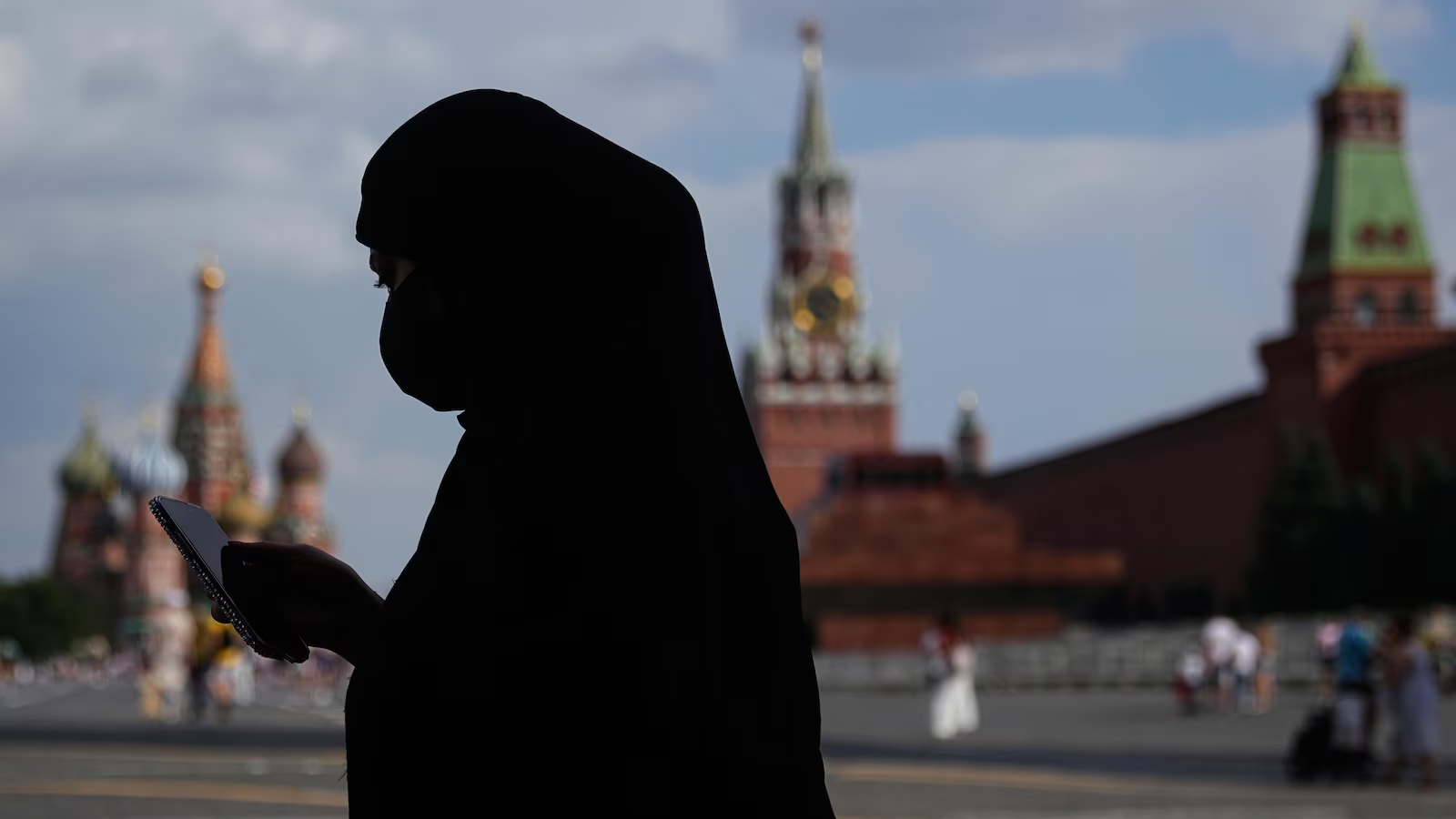
Going online in Russia has become increasingly difficult and dangerous. From blank pages on independent news sites to entire mobile networks going dark, this is not the result of technical failure. Instead, it’s a deliberate campaign by the Russian government to bring the internet under Kremlin control through laws, technology, and strategic takeovers.
From Regulation to Repression
The crackdown began after mass protests in 2011–12, when social media and independent outlets became tools for organizing and dissent. Since then, Russia has passed laws requiring tech companies to store data locally and provide access to the security services.
Popular platforms like Facebook, Instagram, Twitter, and even messaging apps like Signal have been blocked or throttled. Telegram briefly escaped control but remains under pressure. Roskomnadzor, the state’s media and communications regulator, monitors web traffic using deep packet inspection tools and can block or slow sites with precision.
Read Also
Explore Arena Mall Kampala — Uganda’s Modern Shopping Destination
Why More Investors Are Betting on Shopping Malls in Africa
Internet Shutdowns and Punishment
The Kremlin’s tactics now include intentional mobile internet shutdowns and new laws that criminalize search behavior. Citizens can be prosecuted just for looking up “extremist” content — which could be anything from LGBTQ+ rights materials to opposition leaders’ memoirs.
The government is also planning to block WhatsApp, one of the last global apps still widely used in Russia. In its place, the Kremlin is pushing a “national messenger” app called MAX, which comes preinstalled on smartphones and gives full access to user data.
Toward a “Sovereign” Internet
Moscow’s ambition doesn’t stop at censorship. It is actively working on a “sovereign internet”—an isolated digital space modeled loosely on China’s Great Firewall.
To facilitate this, Russia raised the cost of becoming an internet provider and pushed for consolidation among ISPs. Over 50% of Russia’s IP addresses are now controlled by just seven major companies, with state-owned Rostelecom managing a quarter.
Infrastructure throttling has also become common. Providers like Cloudflare report slowed access to sites using their services. Businesses are being pressured to move to Russian hosting providers, further tightening state control.
Although not fully isolated yet, the architecture is being laid to achieve it. Experts describe it as “death by a thousand cuts”—an erosion of freedom, bit by bit.
Russia is closer than ever to cutting itself off from the global internet, replacing it with a heavily censored, state-run ecosystem that discourages dissent and limits access to outside information.